The Justice Department's latest antisemitism suit is only one front in a widening civil-rights battle over how UCLA handled protests, admissions, and the promises universities made after 2020.
The latest Justice Department lawsuit against UCLA is not merely another campus-politics story.
It is not 2024’s argument over slogans, encampments, or whether anti-Zionism is antisemitism. It is a legal warning shot against one of the most prestigious public universities in the country — and it probably is not the end of UCLA’s troubles.
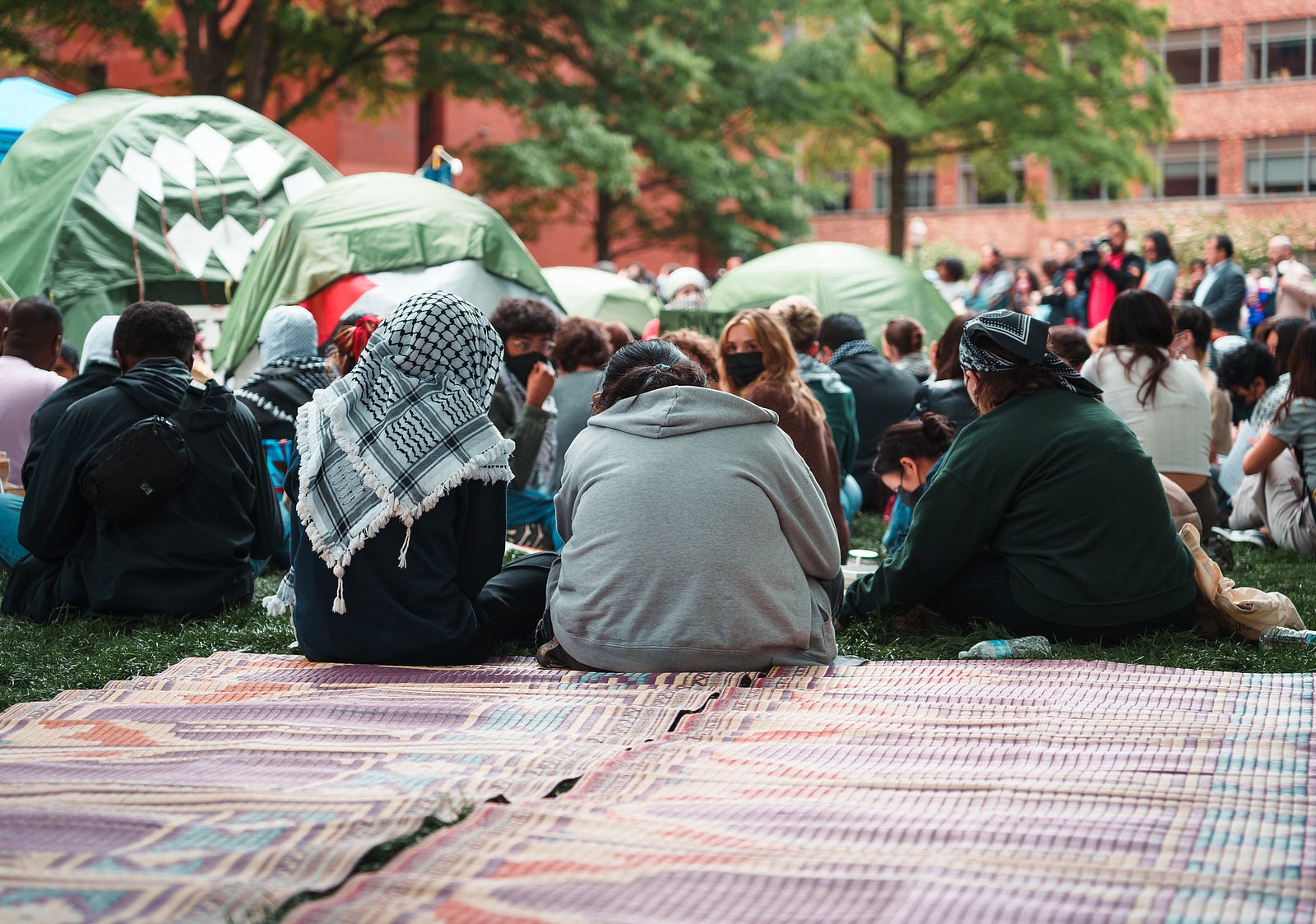
The complaint says UCLA was “deliberately indifferent” to antisemitic harassment after the Oct. 7 Hamas attacks, including during the April 2024 encampment, where DOJ says Jewish and Israeli students were assaulted, blocked from campus spaces, and denied normal access to educational opportunities.
That phrase — “deliberately indifferent” — is the hinge of the lawsuit.
The government is not saying merely that ugly things happened at UCLA. Ugly things happen on campuses. Political protests get heated. Students say stupid things. Administrators panic. That is not automatically a federal civil-rights violation.
The allegation here is more serious: that UCLA knew Jewish and Israeli students were being targeted, blocked, threatened, and assaulted — and still failed to act in a meaningful way.
This is why UCLA’s legal problem is bigger than public relations. Universities have spent years telling us that campus climate is a civil-rights issue. They created offices, task forces, trainings, reporting portals, bias-response systems, and entire bureaucracies built around the idea that students have a right to learn without being targeted because of identity.
Now that same framework is being turned back on them.
And the UCLA case is especially dangerous because this is not the first time these facts have appeared in court. Jewish students and a Jewish professor already sued UCLA over the 2024 encampment.
In that case, Frankel v. Regents of the University of California, the plaintiffs alleged that UCLA allowed a “Jew Exclusion Zone” on campus, where Jewish students were blocked from certain areas unless they disavowed parts of their religious or ethnic identity connected to Israel.
UCLA ultimately agreed to a settlement and permanent court order in July 2025, paying more than $6 million and agreeing to changes meant to protect equal access for Jewish students, faculty, and staff.
Prior settlement is not the same thing as admitting liability, but it does create a record. UCLA has already faced serious litigation over the same basic fact pattern. It also means the Justice Department is not walking into an entirely untested legal theory. The question is no longer whether Jewish students can sue universities over exclusion and harassment. They already have, and in several cases, universities have settled.
The case isn’t UCLA’s only civil-rights headache.
Earlier this year, DOJ sued the University of California over a separate alleged hostile work environment involving Jewish and Israeli employees at UCLA. That case is under Title VII, not Title VI, because it concerns employees rather than students. But the basic accusation is similar: UCLA allegedly failed to prevent and correct antisemitic discrimination after October 7, 2023.
Then there is the medical-school problem.
DOJ has also accused UCLA’s David Geffen School of Medicine of illegal race discrimination in admissions, alleging that UCLA intentionally selected applicants based on race and favored some racial groups over others.
UCLA disputes that characterization, but this is exactly the kind of case many people should have seen coming after 2020.
Back then, universities rushed to issue statements confessing complicity in “systemic racism.” At the time, those statements were mostly treated as moral gestures. Maybe noble. Definitely fashionable. Often empty.
But empty statements can still become legal artifacts.
If a university says it is committed to “racial equity,” then creates admissions roadmaps, hiring goals, diversity rubrics, or “anti-racist” review processes, plaintiffs are going to ask the obvious question: did this remain a vague aspiration, or did it become race-based decision-making?
That is where UCLA may have a much broader exposure.
The antisemitism cases and the admissions cases are not the same legally, but they do rhyme politically and institutionally. In both contexts, the university is being accused of applying civil-rights principles selectively. In one case, critics say UCLA failed to protect Jewish and Israeli students from discrimination. In the other, critics say UCLA used racial preferences while claiming to pursue equity.
UCLA says it has not been passive. Chancellor Julio Frenk has pointed to new safety leadership, a reorganized civil-rights office, a Title VI officer, and strengthened policies.
That may help UCLA going forward. Courts do care whether institutions respond. But the problem for UCLA is that reform after a disaster does not erase the disaster.
The real legal question is not whether UCLA now has better policies. It is whether UCLA violated federal civil-rights law when students and employees needed protection most.
That is why this latest DOJ lawsuit is unlikely to be the end of UCLA’s legal troubles. It is better understood as part of a larger reckoning. For years, universities built a civil-rights machine and assumed they would control where it pointed.
Now the machine is pointing back at them.
(Contributing writer, Brooke Bell)